
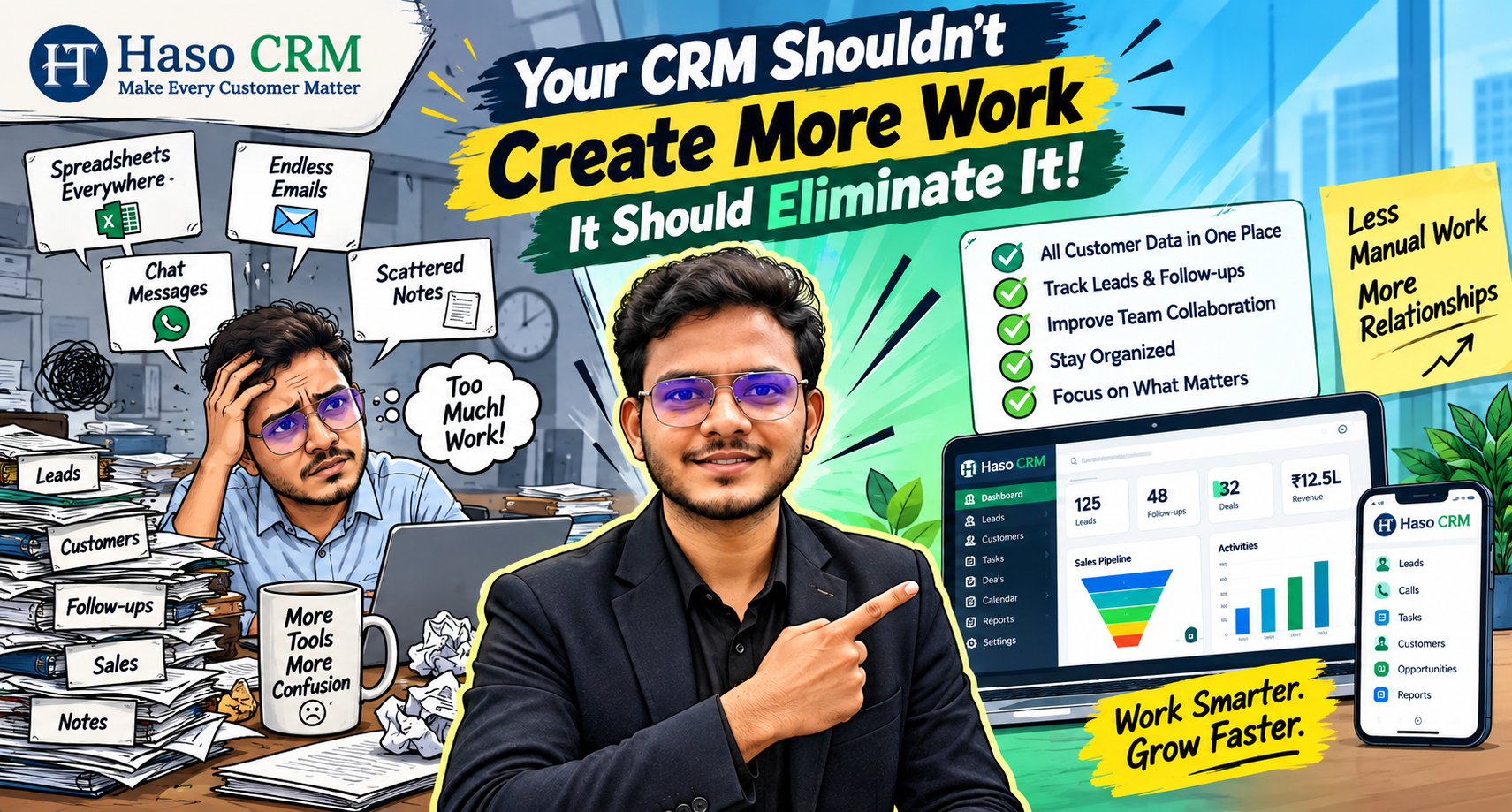
 Customer relationships are the heart of every growing business. But when customer details are scattered across spreadsheets, emails, chat messages, and disconnected tools, managing those relationships can quickly become a full-time job.
That’s where HASO CRM can make a difference.
Instead of treating CRM as just a database of contacts, HASO CRM brings customer information, sales activities, follow-ups, and relationship management into one organized environment. The goal is simple: help businesses spend less time managing data and more time building valuable customer relationships.
What Is HASO CRM?
HASO CRM is a customer relationship management solution designed to help businesses organize and manage interactions with prospects and customers.
A CRM can act as a central source of customer information, allowing teams to keep track of contacts, conversations, opportunities, tasks, and follow-ups without constantly switching between different systems.
For sales and customer-facing teams, having this information in one place can make everyday work more structured and easier to manage.
Why Businesses Need a CRM Today
Customer expectations have changed.
People expect businesses to remember previous conversations, respond quickly, and provide relevant communication. At the same time, sales teams need to manage more leads and opportunities without letting important follow-ups slip through the cracks.
Without a centralized CRM, common problems can include:
- Lost customer information
- Missed follow-ups
- Duplicate data
- Poor visibility into sales activities
- Time-consuming manual updates
- Difficulty tracking customer interactions
- Limited collaboration between team members
A CRM helps turn scattered customer information into a structured workflow.
How HASO CRM Can Support Sales Teams
1. Centralize Customer Information
Instead of searching through multiple spreadsheets or applications, teams can maintain customer information in a centralized CRM environment.
This gives team members easier access to the information they need when communicating with prospects and customers.
2. Organize Leads and Opportunities
Not every lead is at the same stage.
A CRM can help businesses organize prospects according to their position in the sales process, making it easier for teams to understand what needs attention next.
This can create a more consistent sales process from initial contact through conversion.
3. Reduce Missed Follow-Ups
A promising lead can easily become a lost opportunity when nobody remembers to follow up.
CRM-based task and activity management can help teams keep track of upcoming actions and maintain consistent communication with prospects.
4. Improve Team Collaboration
When customer information is accessible to the appropriate team members, sales and customer-service teams can work with greater context.
Instead of asking, “What happened with this customer?”, employees can refer to the available customer history and activities.
5. Make Customer Relationships More Organized
CRM isn’t only about closing deals.
A well-managed CRM can help businesses maintain useful customer information throughout the relationship, supporting more informed communication and better ongoing engagement.
HASO CRM and Business Growth
Growth often creates a hidden problem: more customers mean more information to manage.
A process that works for a small team can become difficult when the number of leads, customers, and interactions increases.
This is why CRM becomes increasingly valuable as a business grows.
HASO CRM can provide a structured foundation for managing customer relationships, helping businesses move from informal customer tracking toward a more organized process.
CRM Isn’t Just Software – It’s a Process
Buying a CRM alone doesn’t automatically improve customer relationships.
The real value comes from how a business uses it.
Teams should establish clear processes for:
- Entering customer information
- Updating lead stages
- Recording important interactions
- Assigning follow-up tasks
- Reviewing sales opportunities
- Maintaining accurate customer records
When CRM technology and internal processes work together, teams can create a more consistent customer-management experience.
Who Can Benefit From HASO CRM?
HASO CRM can be relevant for businesses that need a structured way to manage customer and sales information.
It may be particularly useful for:
- Sales teams
- Growing businesses
- Customer-support teams
- Service-based companies
- Businesses managing multiple leads
- Organizations that rely heavily on repeat customers
- Teams currently using spreadsheets for customer tracking
The specific value depends on the business’s workflow, customer volume, and CRM requirements.
Final Thoughts
Customer relationships shouldn’t depend on someone’s memory, a spreadsheet, or a collection of disconnected conversations.
A modern CRM can give businesses a central place to organize customer information, manage opportunities, coordinate follow-ups, and create more consistent processes.
HASO CRM can serve as a foundation for businesses looking to bring greater structure to customer relationship management — without losing sight of what matters most: the customer.
Frequently Asked Questions About HASO CRM
What is HASO CRM?
HASO CRM is a customer relationship management solution designed to help businesses organize customer information, sales activities, leads, opportunities, and interactions in a centralized environment.
Why should a business use HASO CRM?
Businesses can use CRM software to organize customer data, improve visibility into sales activities, manage follow-ups, and create a more structured approach to customer relationship management.
Is HASO CRM suitable for small businesses?
CRM requirements vary by business, but small businesses can benefit from centralized customer information and organized sales processes as their customer base grows.
Can a CRM help prevent missed follow-ups?
Yes. CRM workflows can help teams track tasks, activities, and follow-ups so important customer interactions are less likely to be overlooked.
How does CRM improve sales management?
A CRM can give sales teams visibility into leads, opportunities, customer interactions, and next steps. This can make it easier to manage the sales pipeline systematically.
Is CRM only useful for sales teams?
No. CRM information can also support customer service, account management, marketing, and other customer-facing functions, depending on the organization’s workflow.
What information can businesses manage in a CRM?
Depending on the CRM platform, businesses may manage contact details, company information, communication history, sales opportunities, tasks, notes, activities, and other customer-related records.
Can HASO CRM support business growth?
A CRM can provide a structured system for managing increasing amounts of customer and sales information, which can become increasingly important as a business expands.
What makes a CRM effective?
An effective CRM combines useful features with consistent team adoption. Accurate data, clearly defined workflows, regular updates, and employee usage are all important to getting value from CRM software.
Leave a Reply