
 Introduction
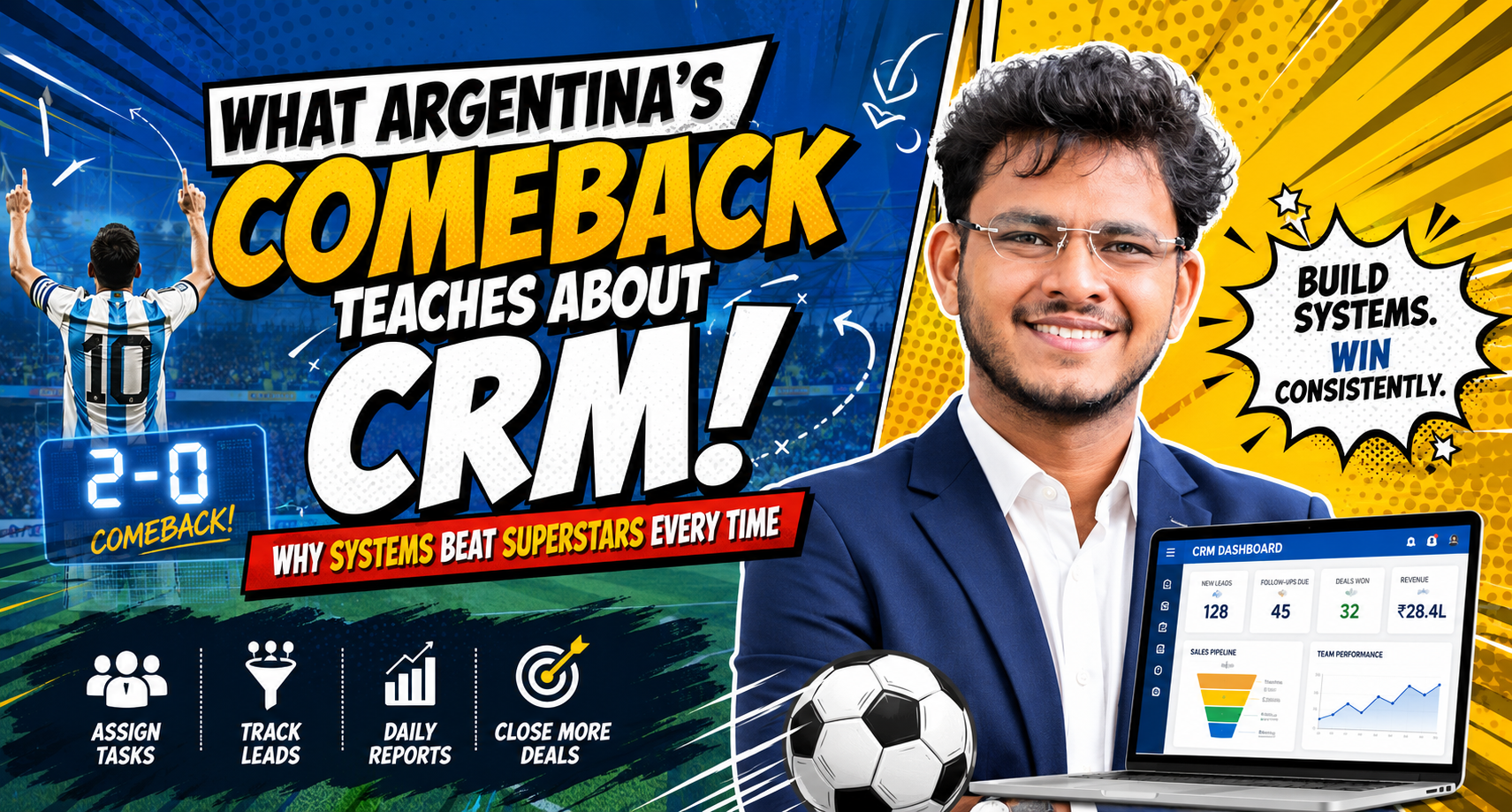
When Argentina found themselves 2 goals down, most people thought the game was over.
But they came back.
Was it because they suddenly had better players?
No.
It was because they had something more powerful than individual talent a system.
The same principle applies to business.
Many business owners believe that hiring experienced salespeople is the key to increasing revenue. But in reality, even the best salesperson can fail without a proper system. On the other hand, an average salesperson can consistently perform well when supported by the right processes and technology.
That is exactly what a CRM (Customer Relationship Management) system does.
Great Teams Don’t Depend on Heroes
Every winning football team has:
- Clear roles for every player
- Constant communication during the game
- A coach who can see the entire field
- A strategy everyone follows
Imagine if every player started playing independently.
No communication.
No coordination.
No plan.
Even the world’s best players would struggle.
Now think about your sales team.
Is Your Sales Team Playing Without a System?
Many businesses face problems like:
- Salespeople forgetting follow-ups
- Leads getting lost in WhatsApp chats or notebooks
- Customers receiving delayed responses
- Managers not knowing who is working on which lead
- Business owners relying on verbal updates
These aren’t employee problems.
They’re system problems.
How CRM Becomes Your Winning System
A CRM brings structure to your sales process.
1. Task Allocation
Every follow-up is assigned to the right salesperson.
Everyone knows exactly what needs to be done and when.
No confusion.
No excuses.
2. Lead Tracking
Every enquiry is tracked from the first phone call until the deal is closed.
You instantly know:
- New leads
- Follow-ups due
- Quotations sent
- Negotiations
- Closed sales
- Lost opportunities
Nothing slips through the cracks.
3. Daily Reports
As a business owner, you don’t have to keep asking:
“Did you call the customer?”
“Did you send the quotation?”
Instead, your dashboard tells you everything:
- Number of calls made
- Follow-ups completed
- Pending leads
- Closed deals
- Individual team performance
You manage with data not assumptions.
Systems Create Consistency
Star performers may leave.
Employees may resign.
New staff may join.
But a strong system keeps your business running.
That’s why successful businesses don’t depend on individuals.
They build processes that anyone can follow.
A CRM ensures your sales process remains consistent regardless of who is on your team.
The Biggest Mindset Shift
Most business owners think:
“If I hire better employees, my business will grow.”
Successful business owners think differently:
“If I build a better system, every employee performs better.”
That’s the difference.
Systems scale.
Heroes don’t.
Final Thoughts
Argentina’s comeback wasn’t built on individual brilliance alone.
It was built on teamwork, communication, visibility, and discipline.
Your business deserves the same advantage.
If your sales process depends on memory, phone calls, or WhatsApp messages, you’re asking your employees to become heroes every day.
Instead, give them a system that helps them win.
Because businesses don’t grow by chance.
They grow by design.
And every great design starts with the right CRM.
Frequently Asked Questions (FAQs)
1. What is a CRM?
A CRM (Customer Relationship Management) system is software that helps businesses manage customer interactions, track leads, assign tasks, automate follow-ups, and monitor sales performance from one place.
2. Why does my business need a CRM?
A CRM helps eliminate missed follow-ups, lost leads, poor communication, and manual reporting. It improves team productivity and gives business owners complete visibility into the sales process.
3. Can a CRM improve sales performance?
Yes. By organizing leads, automating reminders, and tracking every customer interaction, a CRM helps sales teams close more deals and respond faster to customer enquiries.
4. Is CRM only for large companies?
No. Small and medium-sized businesses benefit even more because a CRM helps them manage growth without increasing operational chaos.
5. What features should I look for in a CRM?
Look for features like:
- Lead Management
- Task Allocation
- Follow-up Reminders
- Sales Pipeline Tracking
- Daily Performance Reports
- Customer History
- Mobile Access
- Team Performance Dashboard
6. How does CRM help business owners?
Instead of constantly asking employees for updates, business owners can monitor sales, team performance, pending tasks, and revenue opportunities from a single dashboard.
7. What’s the biggest benefit of using a CRM?
The biggest benefit is consistency.
A CRM creates a repeatable sales process that works even when employees change, helping your business grow with confidence.
Leave a Reply